

Equinor ASA
OSE:EQNR



Decide at what price you'd be comfortable buying and we'll help you stay ready.

|
Johnson & Johnson
NYSE:JNJ
|
US |

|
Berkshire Hathaway Inc
NYSE:BRK.A
|
US |

|
Bank of America Corp
NYSE:BAC
|
US |

|
Mastercard Inc
NYSE:MA
|
US |

|
UnitedHealth Group Inc
NYSE:UNH
|
US |

|
Exxon Mobil Corp
NYSE:XOM
|
US |

|
Pfizer Inc
NYSE:PFE
|
US |

|
Nike Inc
NYSE:NKE
|
US |

|
Visa Inc
NYSE:V
|
US |

|
Alibaba Group Holding Ltd
NYSE:BABA
|
CN |

|
JPMorgan Chase & Co
NYSE:JPM
|
US |

|
Coca-Cola Co
NYSE:KO
|
US |

|
Verizon Communications Inc
NYSE:VZ
|
US |

|
Chevron Corp
NYSE:CVX
|
US |

|
Walt Disney Co
NYSE:DIS
|
US |

|
PayPal Holdings Inc
NASDAQ:PYPL
|
US |
EV/EBITDA
Enterprise Value to EBITDA (EV/EBITDA) ratio compares a company`s total enterprise value to its earnings before interest, taxes, depreciation, and amortization. It shows how much investors are paying for each dollar of the company`s earnings, including both equity and debt.
Enterprise Value to EBITDA (EV/EBITDA) ratio compares a company`s total enterprise value to its earnings before interest, taxes, depreciation, and amortization. It shows how much investors are paying for each dollar of the company`s earnings, including both equity and debt.
Valuation Scenarios
If EV/EBITDA returns to its 3-Year Average (1.5), the stock would be worth kr213.54 (36% downside from current price).
| Scenario | EV/EBITDA Value | Implied Price | Upside/Downside |
|---|---|---|---|
| Current Multiple | 2.4 | kr336.1 |
0%
|
| 3-Year Average | 1.5 | kr213.54 |
-36%
|
| 5-Year Average | 1.6 | kr216.76 |
-36%
|
| Industry Average | 0.2 | kr33.48 |
-90%
|
| Country Average | 7.8 | kr1 078.32 |
+221%
|
Forward EV/EBITDA
Today’s price vs future ebitda
| Today's Enterprise Value | EBITDA | Forward EV/EBITDA | ||
|---|---|---|---|---|
|
kr1T
|
/ |
Jan 2026
$40.3B
|
= |
|
|
kr1T
|
/ |
Dec 2026
$45.8B
|
= |
|
|
kr1T
|
/ |
Dec 2027
$39.7B
|
= |
|
|
kr1T
|
/ |
Dec 2028
$36.3B
|
= |
|
Forward EV/EBITDA shows whether today’s EV/EBITDA still looks high or low once future ebitda are taken into account.
Peer Comparison
| Market Cap | EV/EBITDA | P/E | ||||
|---|---|---|---|---|---|---|
| NO |

|
Equinor ASA
OSE:EQNR
|
821.8B NOK | 2.4 | 18 | |
| SA |

|
Saudi Arabian Oil Co
SAU:2222
|
6.7T SAR | 8.1 | 19.3 | |
| US |
|
Exxon Mobil Corp
NYSE:XOM
|
612B USD | 9.9 | 21.4 | |
| US |
|
Chevron Corp
NYSE:CVX
|
367B USD | 10.3 | 29.7 | |
| CN |

|
PetroChina Co Ltd
SSE:601857
|
2.1T CNY | 9.1 | 13.4 | |
| NL |
R
|
Royal Dutch Shell PLC
OTC:RYDAF
|
278.5B USD | 5.7 | 15.8 | |
| UK |

|
Shell PLC
LSE:SHEL
|
187.3B GBP | 5.1 | 13.9 | |
| FR |
|
TotalEnergies SE
PAR:TTE
|
159.2B EUR | 5.9 | 14.5 | |
| BR |

|
Petroleo Brasileiro SA Petrobras
BOVESPA:PETR4
|
595.7B BRL | 3.8 | 5.5 | |
| UK |

|
BP PLC
LSE:BP
|
87B GBP | 4.3 | 2 134.3 | |
| CN |

|
China Petroleum & Chemical Corp
SSE:600028
|
672.3B CNY | 18.4 | 21.1 |
Market Distribution
| Min | 0.1 |
| 30th Percentile | 2.2 |
| Median | 7.8 |
| 70th Percentile | 16.6 |
| Max | 40 612.5 |
Other Multiples
Equinor ASA
Glance View
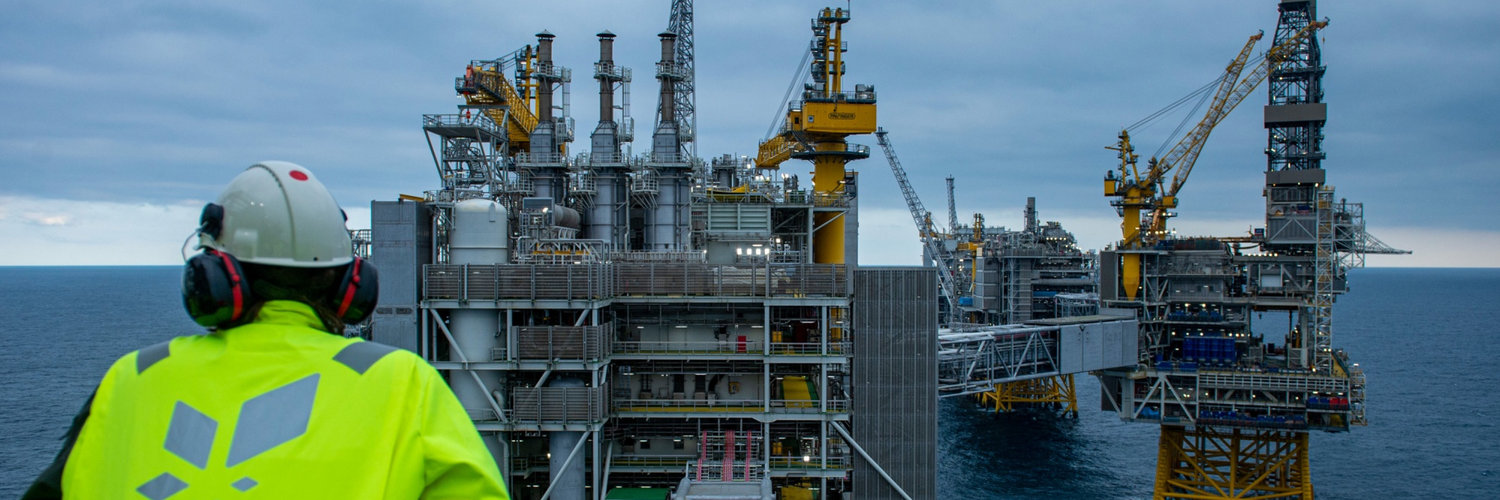
Equinor ASA, originally known as Statoil, is a global energy company rooted in Norway, with a legacy steeped in the exploration and production of oil and gas. Founded in 1972, Equinor has evolved significantly from its early days as a state-owned entity focused on tapping into the rich resources of the North Sea. Today, it stands as a publicly traded company that balances its core expertise in hydrocarbons with a growing emphasis on renewable energy sources. At the heart of Equinor’s operations is its ability to harness conventional and sophisticated technologies to efficiently extract and produce oil and natural gas, securing its status as a major player in the global energy market. Its strategic presence spans across 30 countries, ensuring a diversified portfolio that reduces reliance on any single market or resource. Modern Equinor is a testament to the energy sector’s transition towards sustainability while striving for profitability. The company is increasingly investing in renewable energy projects, such as offshore wind farms, positioning itself as a leader in the green transition. This duality in operations allows Equinor to tap into the oil revenue that still fuels much of the world’s energy needs while also preparing for an inevitable shift towards renewable resources. The blend of securing traditional energy assets with an eye on sustainable growth not only fortifies its revenue streams but also enhances its resilience against the volatility of oil prices. By capitalizing on its robust infrastructure and expertise, Equinor aims to sustain its core business model while actively contributing to a greener future, embodying a pragmatic approach to bridging energy past and future.
